
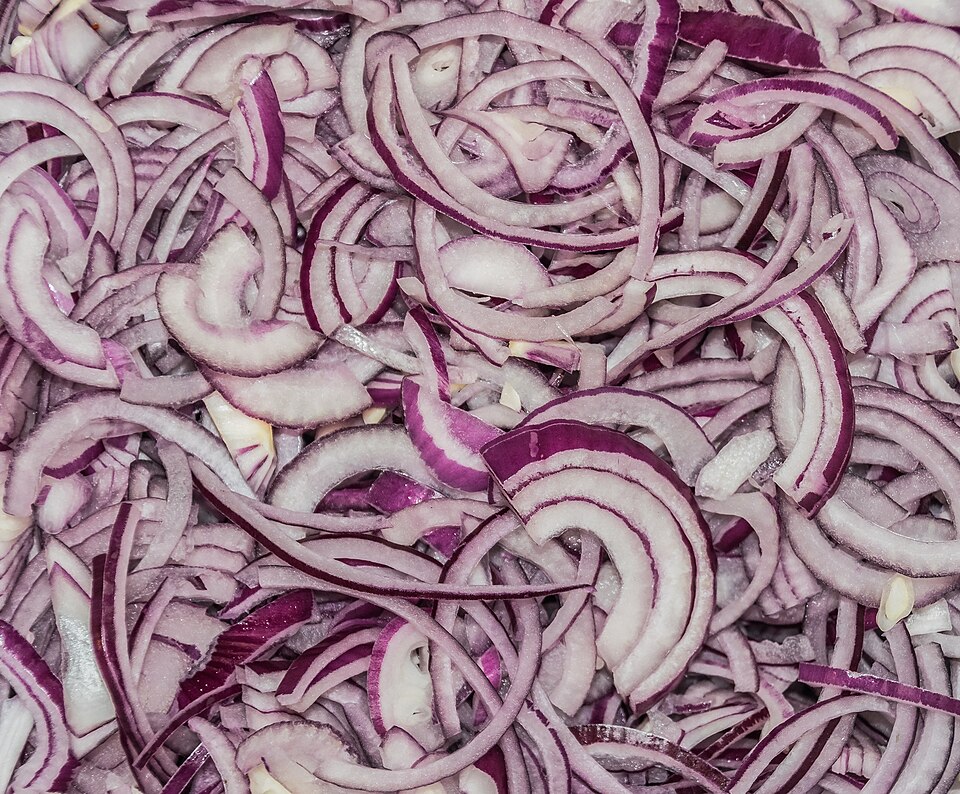
The claim: eating raw onion every day boosts immunity, protects the heart, controls blood sugar and even fights infections. Social media treats it like a miracle vegetable — raw onion salads for "detox", onion water for flu season, and the famous folk remedy of sleeping with onion slices in your socks. But how much of that survives a look at the actual research?
Onions have carried healing reputations for thousands of years. Ancient Egyptians placed them in tombs as symbols of eternal life; Greek athletes reportedly ate them before competitions; and traditional systems from Ayurveda to Unani medicine used onion preparations for coughs, wounds and digestion. That long history is part of why the modern hype feels believable — it sounds like rediscovered wisdom rather than a new fad. But tradition is a starting point for research, not proof. So let's go claim by claim and see what the science actually supports.
What's actually inside an onion
A medium raw onion (about 110 g) is roughly 89% water and delivers around 45 calories, 10 g of carbohydrates, 2 g of fiber and 1 g of protein. The vitamin and mineral list is decent but not spectacular: about a tenth of your daily vitamin C, plus vitamin B6, folate, manganese and potassium (roughly 160 mg). Nothing here explains miracle claims. The interesting part is the bioactive compounds — the chemicals behind the bite, the tears and the studied effects:
- Quercetin — a flavonoid antioxidant concentrated in the outer layers. Red onions carry the most (roughly 20–30 mg per 100 g), followed by yellow, with white onions lowest. A medium red onion gives you around 25 mg of quercetin — modest next to the 500–1,000 mg doses used in supplement trials, but meaningful as part of a daily diet.
- Sulfur compounds — thiosulfinates and cepaenes, created when onion cells are damaged. That's why cutting makes you cry, and these compounds drive most of the studied antibacterial and anti-clotting effects.
- Prebiotic fiber — mainly fructans and fructooligosaccharides (FOS), which feed beneficial gut bacteria. These are also the compounds behind onion-related gas in sensitive people.
- Anthocyanins — the red-purple pigments in red onions, an extra layer of antioxidants that white onions lack.
One practical note: much of the quercetin sits in the outer rings, so don't peel aggressively — remove only the dry, papery skin.
Heart health — the strongest evidence
If onion has a best-supported benefit, this is it. Human trials using quercetin supplements (typically 500 mg or more daily for at least 8 weeks) have found modest but real drops in blood pressure, mainly in people who already had hypertension — on the order of a few mmHg systolic. That is not nothing, but here is the honest catch: you would need to eat an unrealistic pile of onions to match supplement doses. The realistic takeaway is subtler and comes from diet-level evidence.
Large population studies that track eating habits over years consistently find that people who consume more flavonoid-rich foods — onions, apples, berries, tea — tend to have better cardiovascular outcomes. These are associations, not proof that onions alone did the work, but they point in the same direction as the trials. Separately, onion compounds appear to reduce platelet clumping in lab and small human studies, which matters because clumping is part of how blood clots form. A few small trials of onion juice or onion extract have also reported small improvements in cholesterol markers, though that evidence is thinner than the blood pressure data.
Bottom line: onion is a legitimate supporter of heart health inside an overall good diet. It is not a treatment for heart disease, and it replaces no medication.
Blood sugar — interesting, but early
This is one of the most-shared claims: "raw onion controls diabetes." The research is genuinely interesting but nowhere near conclusive. Animal studies and a handful of small human trials suggest onion extracts may lower fasting blood sugar and improve insulin sensitivity, likely through quercetin and the sulfur compounds. In one small trial, people with type 2 diabetes who added fresh red onion to a meal had lower post-meal glucose spikes than with the same meal without onion — promising, but small and short-term.
What is missing: large, long-term randomized trials in people with diabetes. Nobody has shown that daily raw onion meaningfully changes HbA1c, the three-month blood sugar marker doctors actually use to judge control. So the fair reading is this: onion is an excellent near-zero-glycemic vegetable to build meals around if you have blood sugar concerns — but it is not a diabetes treatment. And if you take glucose-lowering medication, talk to your doctor before making big dietary changes, because stacking effects can push sugar too low.
Immunity and infections — separating lab from life
Onion's sulfur compounds genuinely kill or slow bacteria — including common troublemakers like E. coli and Staphylococcus aureus — in petri dishes. Quercetin calms inflammatory pathways in lab and animal studies, and the vitamin C contributes a small amount to normal immune function. This is where most "onion boosts immunity" posts get their material, and none of it is fabricated.
The problem is the leap from petri dish to person. Antibacterial in a lab dish does not mean antibacterial in your bloodstream after lunch — digestion, absorption and metabolism change everything. And "boosts immunity" is a slippery phrase: your immune system is not a score you raise with a vegetable. It is a balanced system that mostly needs adequate nutrition, sleep and freedom from deficiencies. A diet rich in varied vegetables (onions included) supports normal immune function. One vegetable, no matter how pungent, does not upgrade it.
And the onion-in-socks remedy? There is no mechanism by which onion on your feet treats a respiratory infection, and no clinical evidence it does anything beyond making your socks smell. Warm fluids, rest and time do the real work.
Gut health — the quiet benefit
The least-hyped and possibly most solid everyday benefit: onions are rich in prebiotic fructans that feed beneficial gut bacteria such as Bifidobacteria. A well-fed gut microbiome is linked to better digestion and steadier immune function. Unlike the flashier claims, this one needs no exotic mechanism — fiber feeds good bacteria, full stop.
The catch is the same compound in a different gut. Fructans are FODMAPs — fermentable carbohydrates that can cause gas, bloating and cramps in people with IBS or sensitive digestion. If raw onion reliably upsets your stomach, this "benefit" is working against you, and cooked onion (or simply smaller amounts) is the smarter choice.
Cancer risk — what the data really says
You will see claims that onions "fight cancer." Here is the honest version: large observational studies have found that people who eat more allium vegetables (onions, garlic, leeks) tend to have somewhat lower rates of certain cancers, particularly stomach and colorectal cancers. Lab studies show quercetin and onion sulfur compounds can slow cancer cell growth in dishes and in animals.
But observational studies cannot prove cause and effect — frequent onion-eaters also tend to eat more vegetables overall and differ in a dozen other lifestyle ways. No human trial has shown that eating onions prevents or treats cancer. Think of onion as part of a dietary pattern associated with lower risk — not a shield, and never an alternative to real treatment.
Does it have to be raw?
Mostly, yes — for the maximum effect. The sulfur compounds are the most fragile: heat breaks them down quickly, which is exactly why cooked onion turns sweet and mellow instead of sharp. Quercetin is sturdier but still declines with long, hot cooking, and boiling leaches a share of it into the water. A rough ranking:
| Method | What happens to the good stuff |
|---|---|
| Raw (freshly cut) | Maximum sulfur compounds and quercetin |
| Light sauté, a few minutes | Keeps most quercetin; sulfur compounds partly reduced |
| Roasted / caramelized | Sweeter and softer; meaningful loss of sulfur compounds |
| Boiled 15+ minutes | Biggest losses — unless you also consume the cooking water |
If the raw bite is too strong, you do not have to suffer: slice red onion thin and soak it in cold water for 10 minutes to mellow the sharpness while keeping most of the benefit. Quick-pickled onions (vinegar, a pinch of salt, 30 minutes) are another excellent raw-ish option that keeps the crunch.
How to use it right
- How much: around half a medium onion (30–50 g) a day in salads or meals is the amount most consistent with dietary research — easy, sustainable, no heroics required.
- Which type: red onions for the highest quercetin and anthocyanins; yellow as a solid all-rounder; white when you want the mildest flavor.
- Prep matters: slice or chop 5–10 minutes before eating. The beneficial sulfur compounds form after the cells are damaged, so a short rest helps — the same principle as with garlic. And don't peel past the papery skin.
- Pair smart: some of onion's antioxidants absorb better with a little fat, so olive oil in the salad dressing isn't just tasty — it's functional.
- When: with meals rather than on an empty stomach, to keep digestion comfortable.
Who should be careful
- IBS and sensitive stomachs: raw onion is high in fructans (FODMAPs) — a classic trigger for gas, bloating and cramps. Try small amounts, or cooked onion instead.
- Acid reflux: raw onion is one of the most common heartburn triggers. If it bothers you, it's not worth forcing — cooked is gentler.
- Onion or garlic allergy: uncommon but real, ranging from skin irritation to digestive distress. Anyone with a known allium allergy should avoid it entirely.
- Blood thinners or upcoming surgery: onion has mild anti-clotting activity. Normal food amounts are fine, but concentrated onion supplements in large doses deserve a conversation with your doctor.
- Pets: onions are toxic to dogs and cats — they damage red blood cells. Keep onion-heavy foods well away from them.
Myth vs fact
- Myth: "Onion in socks cures the flu." Fact: No evidence and no plausible mechanism. A comforting ritual, not medicine.
- Myth: "Raw onion detoxes your body." Fact: Your liver and kidneys handle detox; onion simply adds antioxidants to the diet.
- Myth: "More onion means more benefit, without limit." Fact: Benefits plateau; excess mainly buys stomach trouble and very noticeable breath.
- Myth: "Cooked onion is worthless." Fact: Weaker in sulfur compounds, but still nutritious — and far better than no onion at all.
🎬 Watch the video version
We broke down the raw onion story in our NiazBite video — same facts, in under 7 minutes.
Watch on YouTubeQuick questions
How much raw onion per day is reasonable?
Around half a medium onion (30–50g) daily in salads or meals is a sensible amount used in many dietary studies.
Red, white or yellow onion — which is healthiest raw?
Red onions typically have the highest quercetin content, making them the best raw choice nutritionally.
Can raw onion cure a cold?
No. It has mild antibacterial properties in lab settings, but there is no evidence it cures colds or flu in humans.
Why does cutting onion make me cry?
Damaged onion cells release sulfur compounds that form a mild gas (syn-propanethial-S-oxide), which irritates the eyes. Chilling the onion for 30 minutes before cutting reduces the effect. It doesn't change the nutrition.
Can I eat raw onion at night?
There's no strong evidence it disturbs sleep directly, but if you're prone to acid reflux, raw onion late in the evening can cause heartburn that keeps you up. Eat it earlier in the day if that's you.
Is "onion water" (soaked overnight) beneficial?
Not really. Most of the beneficial compounds stay in the onion flesh; the water picks up mainly flavor and a little else. You're better off eating the onion itself.
Does cooking destroy quercetin completely?
No. Quercetin is relatively heat-stable compared to the sulfur compounds, so lightly cooked onion still retains a good share. Long boiling causes the biggest losses — and much of what's lost ends up in the cooking water.