
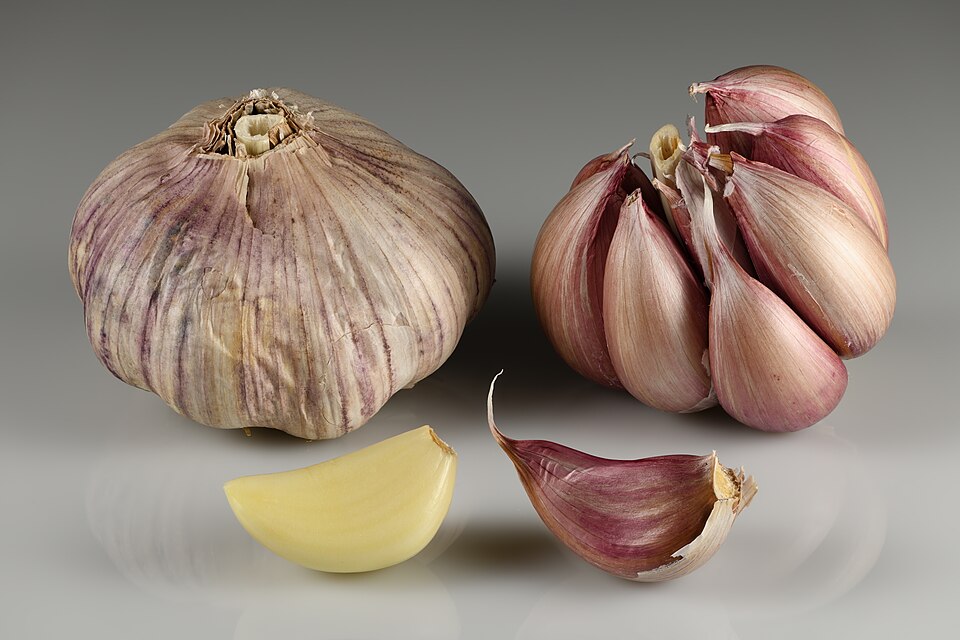
The claim: raw garlic is "nature's antibiotic" and cooking destroys everything good in it. Garlic supplements sell millions on this idea, and morning routines built around chewing raw cloves get millions of views. So should you really be biting into raw garlic every day?
Garlic's medicinal reputation is about 5,000 years old. Pyramid workers in ancient Egypt were reportedly given garlic for strength; Greek soldiers ate it before battle; and in the world wars it earned the nickname "Russian penicillin" for use on wounds when antibiotics were scarce. Modern science took the folklore seriously enough to run real clinical trials — and the results are a mixed, genuinely interesting bag. Few foods have been studied as heavily as garlic, which makes it a perfect case study in how to read health claims carefully. Here's what the trials actually show.
The allicin story
Garlic's star compound is allicin — but here is the twist: allicin doesn't exist in an intact clove. The clove stores a precursor called alliin, plus an enzyme called alliinase kept in separate compartments. When you crush, chop or chew garlic, the compartments break and the enzyme converts alliin into allicin within minutes. That fresh, pungent smell is allicin being born.
Allicin is responsible for much of garlic's studied antibacterial and heart-health effects — and it is fragile. It breaks down quickly on its own into other sulfur compounds (diallyl sulfides and friends), and heat above about 60°C (140°F) destroys the alliinase enzyme. That means garlic thrown straight into a hot pan, or microwaved whole, never makes much allicin at all. A swallowed whole clove isn't much better: without crushing, the chemistry barely starts.
The 10-minute trick
Research points to a simple fix: crush garlic and let it rest for 10 minutes before cooking. That gives the enzyme time to make allicin, and allicin itself survives heat far better than the enzyme does. So crushed-and-rested garlic keeps a good share of its potency through normal cooking, while uncrushed garlic heated immediately loses most of it. Microwaving whole cloves is the worst common method — fast, intense heat with no enzyme head-start.
In practice: crush or finely chop your garlic first, do your other prep, and add the garlic to the pan last. Ten minutes of patience buys you most of the benefit with none of the raw burn.
Blood pressure — the best evidence garlic has
This is where garlic's human-trial record looks strongest. Multiple randomized trials — mostly using aged garlic extract (garlic matured for many months, which converts harsh compounds into gentler, stable ones) — found meaningful drops in blood pressure. Pooled analyses of these trials report average reductions of around 8 mmHg systolic in people with hypertension over about 12 weeks. That is a real, clinically relevant shift — roughly comparable to some lifestyle interventions, though not to prescription drugs.
Two honest caveats. First, the effect shows up mainly in people who actually have high blood pressure; people with normal readings see little change. Second, most of the strong trials used aged extract supplements, not fresh cloves — so the evidence is best for that specific preparation. Fresh crushed garlic likely helps too, but it hasn't been tested as rigorously in this form.
Cholesterol — small but real
Meta-analyses pooling many garlic trials find small reductions in total and LDL ("bad") cholesterol — typically on the order of a few percent — with little change in HDL ("good") cholesterol or triglycerides. The effect looks larger in people who started with higher cholesterol and in trials lasting more than 8 weeks. Nobody's LDL was transformed by garlic alone, and the effect is smaller than what diet changes or statins achieve. Think of it as a modest nudge in the right direction, not a cholesterol treatment.
Colds and immunity
The famous evidence here is one small but well-designed trial: about 150 adults took either a garlic supplement or a placebo daily for 12 weeks through winter. The garlic group caught noticeably fewer colds and recovered faster when they did get sick. It is a genuinely encouraging result — and also a lonely one. It was a single small study, and it hasn't been strongly replicated since. So garlic might reduce how often you catch colds, but the evidence is thin enough that no honest reviewer would call it proven. As with onions, "boosts immunity" oversells it: garlic supports a healthy diet; it doesn't upgrade your immune system.
"Nature's antibiotic" — the petri dish problem
Allicin kills bacteria impressively in laboratory dishes — including some drug-resistant strains. That is real and well documented, and it's the entire basis of the "natural antibiotic" claim. But inside the human body, allicin is rapidly broken down and diluted; the concentration that wipes out bacteria in a dish never reaches your bloodstream from eating garlic. There is no good evidence that eating garlic cures bacterial infections in people — urinary infections, strep throat, infected wounds and the rest still need real medical treatment. Garlic is a food with mild antimicrobial properties, not a medicine cabinet.
Raw vs cooked — the honest scorecard
| Form | Allicin potential | Notes |
|---|---|---|
| Raw, crushed + rested 10 min | Highest | Strongest flavor; can burn the stomach |
| Crushed, rested, then lightly cooked | Good | The best everyday compromise |
| Chopped straight into a hot pan | Low | Enzyme destroyed before it can work |
| Whole cloves roasted, boiled or microwaved | Very low | Flavor only; sweet and mellow |
| Aged / black garlic | Different compounds | Mellow, sweet; studied separately for antioxidants |
| Jarred garlic powder or paste | Low | Enzyme mostly inactive by processing |
| Garlic supplements | Highly variable | Check for standardized allicin potential on the label |
Fresh cloves vs supplements — what's worth your money?
If you eat 1–2 crushed cloves a day in your food, you probably don't need a supplement — you're already in the studied range, and food garlic gives you the full spectrum of compounds plus, well, dinner. Supplements make sense mainly for two groups: people who can't stand the taste or stomach burn of fresh garlic, and people targeting blood pressure, where the best trial evidence is specifically for aged garlic extract.
If you do buy, shop carefully — this market is full of duds. Look for "standardized allicin potential" or a stated allicin yield on the label, and prefer brands that publish third-party testing. Enteric-coated tablets are designed to survive stomach acid so the allicin forms where it can be absorbed. Avoid bargain-bin garlic oil capsules with no standardization; many contain almost no active compounds. And remember the interaction cautions in the section below apply more to concentrated pills than to food — tell your doctor or pharmacist what you're taking.
How to use it right
- How much: studies typically use the equivalent of 1–2 fresh cloves (about 4 g) a day. More is not meaningfully better.
- The method: crush or finely chop, wait 10 minutes, then eat raw in food or cook normally. Swallowing whole cloves skips the chemistry — crush first.
- With food, not on empty: raw garlic on an empty stomach is the classic recipe for nausea and heartburn. Mix it into meals.
- Storage: keep bulbs cool, dark and dry — not in the fridge, where they sprout faster. Never store raw garlic in oil at room temperature: without acid or refrigeration, that invites botulism risk. Refrigerate garlic-in-oil and use within days, or acidify it properly.
- Black garlic: if raw garlic is too harsh for you, aged black garlic is mellow, slightly sweet and has its own studied antioxidant profile — a legitimate alternative, not just a garnish.
Who should be careful
- Blood thinners and surgery: garlic in medicinal amounts can slow blood clotting. If you take warfarin or similar drugs, or have surgery coming up, talk to your doctor — concentrated garlic supplements are usually paused before operations.
- Sensitive stomachs and reflux: raw garlic is a well-known trigger for heartburn, nausea and that burning sensation. Cooked or aged forms are much gentler.
- Garlic allergy: rare but real; skin rashes and breathing difficulty have been reported. Anyone with a known allium allergy should avoid it.
- Medication interactions: garlic supplements can interact with some prescription drugs (including certain HIV medications and blood-pressure drugs). If you take daily medication, check with a pharmacist before starting concentrated supplements — food amounts are far less of a concern.
- Pets: like onions, garlic is toxic to dogs and cats. Keep it away from them.
- Everyone else's nose: raw garlic breath is legendary and long-lasting — it comes from sulfur compounds exhaled through the lungs, so mints only mask it. Plan accordingly.
Myth vs fact
- Myth: "Garlic cures infections like an antibiotic." Fact: Lab antibacterial effects don't translate into curing human infections. See a doctor for real infections.
- Myth: "You must chew it raw on an empty stomach every morning." Fact: Crushing and resting matters far more than suffering. With food is gentler and still effective.
- Myth: "More cloves means more benefit." Fact: 1–2 cloves is the studied range; excess mainly buys stomach pain and bleeding risk.
- Myth: "All garlic pills are the same." Fact: Actual allicin content varies wildly between brands; many cheap ones are near-empty.
Quick questions
How many cloves per day?
Studies typically use the equivalent of 1–2 fresh cloves (about 4g) daily.
Do garlic pills work?
Only some. Look for standardized allicin potential on the label; many cheap brands contain almost none. Aged garlic extract has the best trial evidence, mainly for blood pressure.
Does garlic cure infections?
No. Lab antibacterial effects don't translate into curing human infections. See a doctor for real infections.
Why does raw garlic burn my stomach?
Allicin and related sulfur compounds irritate the stomach lining, especially on an empty stomach. Eating garlic with food, or using cooked or aged garlic, avoids most of the burn while keeping much of the benefit.
Can I just swallow whole cloves to avoid the taste?
That defeats the purpose. Allicin only forms when the clove's cells are crushed — a swallowed whole clove mostly passes through without releasing it. Crush first, then mix into food.
Is black garlic as healthy as raw garlic?
It's different rather than weaker. Aging converts harsh compounds into stable antioxidants (like S-allyl cysteine) that have their own studied benefits, especially for heart markers — and it's far gentler on the stomach.
Is it safe to store chopped garlic in oil?
Only refrigerated and used within a few days. Raw garlic in oil at room temperature can allow botulinum bacteria to grow, which is a serious food-safety risk. When in doubt, freeze it instead.