
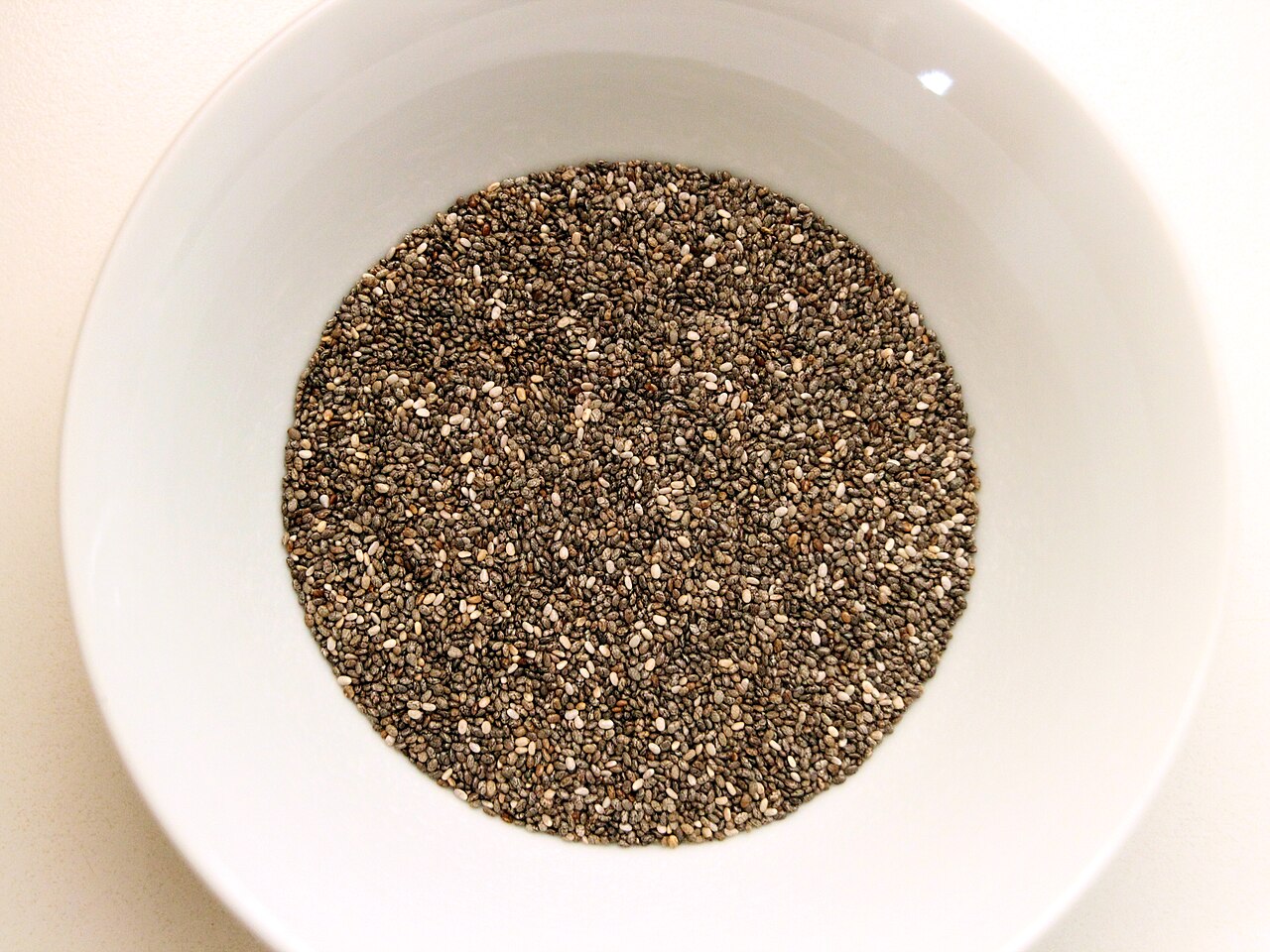
The claim: chia seeds are a "superfood" that melts fat, delivers omega-3s like fish oil, keeps you full for hours and hydrates you from the inside. They're in every smoothie bowl on the internet, usually photographed next to a flat stomach. But do these tiny seeds live up to the giant promises — or is this just brilliant marketing of a very old food?
Chia is genuinely ancient: it was a staple crop of Mesoamerican civilizations, valued by Aztec and Maya cultures as a durable, energy-dense food for messengers and warriors. Then it spent centuries as a curiosity — most Westerners knew it only as the punchline of a novelty planter gag. The "superfood" rebrand arrived in the 2010s, when the wellness industry needed a new hero ingredient: tiny, photogenic, exotic-sounding, and cheap to ship. The marketing ran far ahead of the research, and it never really looked back.
This investigation checks every major claim against the trials: weight loss, fullness, omega-3s, blood sugar, heart health — plus the one genuine danger the superfood posts never mention.
What's actually inside: the numbers
One ounce (28g, about 2 tablespoons) of chia seeds contains:
| Nutrient | Per 28g (2 tbsp) | Share of daily needs* |
|---|---|---|
| Calories | 138 | ~7% |
| Fibre | 10g | ~35% |
| Protein | 5g | ~10% |
| Omega-3 (ALA) | 5g | ~300%+ of the basic ALA target |
| Calcium | 177mg | ~18% |
| Magnesium | 95mg | ~24% |
| Iron | 2.2mg | ~12% |
| Zinc | 1.3mg | ~12% |
*Approximate, for an average adult.
That fibre figure is genuinely impressive — about a third of your daily needs in two spoonfuls, mostly soluble fibre that forms the famous gel. On paper, chia is one of the most fibre-dense foods you can buy, and the mineral content (calcium, magnesium, iron) is a real bonus for a seed. This is the honest foundation everything else has to be measured against.
Claim 1: "Chia melts fat" — the trials disappointed
Here's the awkward part: when researchers actually tested chia for weight loss, the results were flat. In a 12-week trial, overweight adults taking daily chia lost no more weight than the placebo group — despite the fibre, despite the gel, despite the theory. Other small trials have found, at best, trivial differences that don't survive honest statistical scrutiny.
Why doesn't the logic work? The theory was sound: soluble fibre forms a gel, the gel should slow stomach emptying, and that should increase fullness and reduce eating. In practice, the effect on actual calorie intake is small and easily overridden — people compensate later, or the rest of the diet swallows the difference. Fibre helps satiety at the margins; it doesn't override a calorie surplus. No seed burns fat. The "fat-burning superfood" framing was marketing, not physiology.
The fair version of the claim: chia may help you feel slightly fuller when it's part of a fibre-rich meal, and replacing low-fibre foods with chia-containing ones is a genuine dietary upgrade. But as a weight-loss intervention on its own, the trials say no.
Claim 2: "Keeps you full for hours"
Partly true, heavily oversold. Chia's soluble fibre does absorb water and form a gel — up to 10–12 times the seed's weight — which slows how fast the stomach empties. In the short term (an hour or two after eating), people do report feeling fuller after chia-containing meals versus identical meals without it.
But "full for hours" is an exaggeration, and fullness doesn't automatically mean eating less later. The human appetite system is stubbornly good at compensating. Chia is a legitimate satiety helper — useful in porridge or yogurt if you tend to get hungry mid-morning — not an appetite switch.
Claim 3: "Omega-3s like fish" — the fine print
Chia's omega-3 is ALA (alpha-linolenic acid), the plant form — and the human body converts ALA to the EPA and DHA forms found in fish at only about 5–10% efficiency (even less in some people). So while 5g of ALA sounds enormous next to fish oil, the usable EPA/DHA your body actually gets is a small fraction of that.
It's not a fish-oil replacement, full stop. But the footnote cuts both ways: for vegetarians and vegans, chia remains one of the best plant sources of ALA available — far richer than most foods — and ALA itself has modest independent associations with heart health in large observational studies. Good supporting player, bad headliner.
Claim 4: Blood sugar and diabetes
Modest but real. When chia's gel fibre is mixed into a carb-containing meal, it slows carbohydrate absorption and blunts the post-meal glucose rise — small trials in people with type 2 diabetes found improved post-meal readings and, in longer trials, small improvements in blood pressure and inflammatory markers. The effect is gentle and meal-dependent: sprinkling dry chia on top of dessert does far less than stirring soaked chia into porridge. A helper, not a treatment.
Claim 5: Heart health and cholesterol
Small trials have found modest improvements — slight reductions in blood pressure and triglycerides, small bumps in ALA blood levels — consistent with what you'd expect from adding 10g of soluble fibre plus plant omega-3s to a diet. Nothing dramatic, nothing that replaces medication or an overall healthy diet pattern. The honest summary: chia nudges several heart markers in the right direction, a little.
What chia is genuinely best at: digestion
If chia has a killer application, it's the most unglamorous one: constipation and regularity. Ten grams of fibre per serving genuinely moves things along — soluble fibre softens stool, insoluble fibre adds bulk. For people who don't eat enough vegetables or whole grains, two tablespoons of chia is one of the easiest fibre upgrades available, and it works within days.
Two rules for this use: ramp up gradually (jumping from low fibre to 10g overnight causes the bloating and gas the internet complains about — add a teaspoon a day and build up), and drink water with it. Fibre without fluid can make constipation worse, not better.
⚠️ The one real danger: never eat them dry
Chia seeds can absorb 10–12 times their weight in water — and they start expanding the moment they hit moisture. Eating a dry spoonful and chasing it with water has caused documented cases of oesophageal blockage: the seeds swelled into a gel plug in people's throats, requiring emergency removal. This is the warning the superfood posts never include, and it's the most important paragraph in this article.
The rule is simple: always soak chia in liquid for 10–15 minutes first, or stir into already-wet food (yogurt, porridge, smoothies) and let it sit a few minutes. Never eat dry chia by the spoonful, and keep them away from small children and anyone with swallowing difficulties.
Chia vs flaxseed vs basil seeds (sabja/tukmaria)
Chia's two main rivals deserve an honest comparison, since South Asian readers likely know basil seeds already:
| Per 2 tbsp (approx) | Chia | Flaxseed (ground) | Basil seeds |
|---|---|---|---|
| Calories | 138 | ~110 | ~120 |
| Fibre | 10g | ~6g | ~10g |
| Omega-3 (ALA) | 5g | ~4.5g | Lower |
| Protein | 5g | ~4g | ~4g |
| Prep needed | None (soak only) | Must be ground | Soak 10–15 min |
| Price (South Asia) | Expensive/imported | Cheap | Very cheap |
The practical takeaway: nutritionally, chia and flax are close cousins — flax has slightly more ALA and beneficial lignans, chia needs no grinding and is easier to use. Basil seeds match chia on fibre at a fraction of the price in South Asia, though they're lower in omega-3s. If budget matters (and it should), local flax and basil seeds deliver most of chia's real benefits for far less money. The superfood premium is mostly import cost, not superior nutrition.
How to use chia right
- The studied range: 1–2 tablespoons (15–30g) a day. More than that invites bloating without extra benefit.
- Always soak: 10–15 minutes in water, milk or yogurt until a gel forms. Overnight in the fridge = chia pudding.
- Basic chia pudding: 2 tbsp chia + 1 cup milk/yogurt + a little honey or fruit, refrigerate overnight. High-fibre, genuinely filling breakfast.
- Ramp up slowly: start with 1 teaspoon daily for a few days if you're not used to fibre, then build up.
- Drink water: fibre needs fluid to work with, not against you.
- Best vehicles: porridge, overnight oats, yogurt, smoothies (blend after soaking), raita. Avoid baking them into dry snacks where they can't hydrate.
- Storage: dry seeds keep for years in an airtight container (the antioxidants protect the fats); soaked chia keeps 3–5 days refrigerated.
Who should be careful
- Everyone — the dry-seed rule: never eat chia dry by the spoonful. Soak first, every time.
- Swallowing difficulties: anyone with dysphagia or a narrowed oesophagus should avoid chia's expanding gel or use only fully pre-soaked, smooth preparations — ideally after medical advice.
- Blood thinners / blood pressure drugs: very high chia intakes may mildly thin blood and lower blood pressure. Normal servings (1–2 tbsp) are fine, but megadoses alongside warfarin-type drugs or BP medication deserve a doctor's input.
- IBS and sensitive guts: a sudden 10g fibre load can cause gas, bloating and cramping. Start tiny, go slow.
- Low blood pressure: chia's mild BP-lowering effect is a bonus for most, but worth knowing if your pressure already runs low.
- Rare allergies: seed allergies to chia exist but are uncommon — stop and seek advice if you react.
Myth vs fact
- Myth: Chia melts fat. Fact: A 12-week trial found no weight loss vs placebo. Fibre helps fullness; it doesn't burn fat.
- Myth: Chia omega-3s replace fish oil. Fact: ALA converts to EPA/DHA at ~5–10% efficiency. Great plant source, not a substitute.
- Myth: More chia = more benefit. Fact: 1–2 tbsp is the sweet spot; more just means bloating.
- Myth: Chia is uniquely nutritious. Fact: Flax and basil seeds deliver most of the same benefits far cheaper in South Asia.
- Myth: You can eat them dry like other seeds. Fact: Dry chia + water can form a throat-blocking gel. Always soak first.
Quick questions
How much chia per day?
1–2 tablespoons (15–30g) is the studied range. More than that can cause bloating without extra benefit. Start with a teaspoon if you're new to high fibre, and build up over a week.
Chia vs flaxseed?
Nutritionally close cousins. Flax has slightly more ALA and beneficial lignans, but must be ground to be absorbed; chia needs no grinding and is easier to use. Flax is much cheaper in South Asia — a very reasonable swap.
Best way to eat chia?
Soaked in water, milk or yogurt for 10–15 minutes (overnight = chia pudding), or stirred into porridge and smoothies and left to sit a few minutes. Never eat them dry by the spoonful.
Any medication concerns?
Very high doses may mildly thin blood or lower blood pressure — relevant if you take blood thinners or BP drugs. Normal servings (1–2 tbsp) are fine, but check with your doctor before megadosing.
Can chia seeds help constipation?
Yes — this is arguably their strongest real-world use. The 10g of fibre per serving genuinely improves regularity, especially if your diet is otherwise low in fibre. Remember to drink water with them.
Are basil seeds (sabja) a good substitute?
For fibre, yes — basil seeds match chia at a fraction of the price in South Asia, and they gel the same way. They're lower in omega-3s, but for digestion and fullness they're an excellent local alternative.
Do chia seeds go bad?
Dry seeds keep for years in an airtight container — their natural antioxidants protect the fats. Soaked chia keeps 3–5 days in the fridge. If dry seeds smell rancid or musty, discard them.