
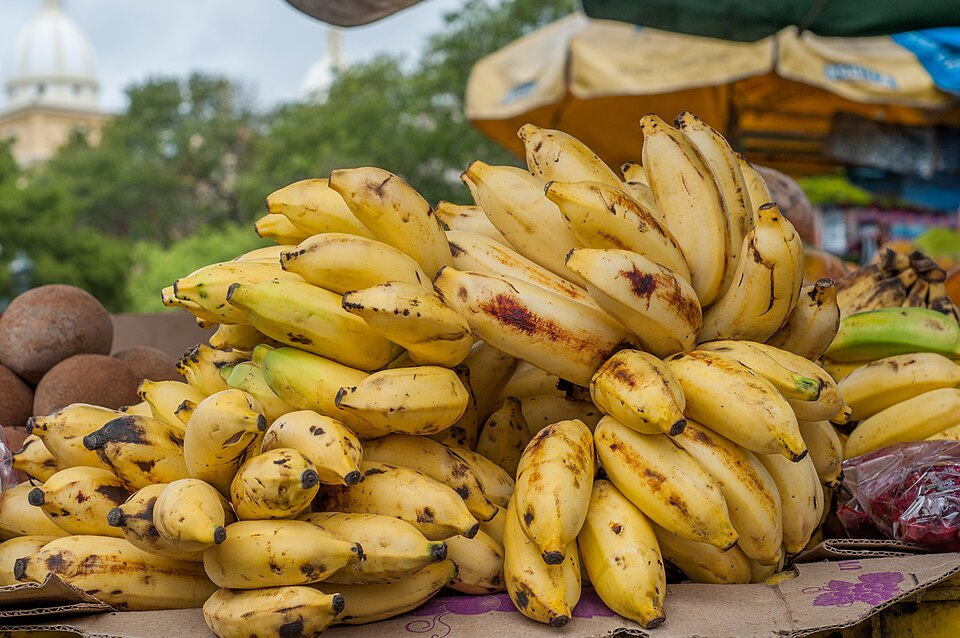
The claim: bananas are "too sugary" and secretly fattening — dieters are told to avoid them, while athletes eat them by the bunch and marathon aid stations hand them out like candy. It's one of the strangest splits in nutrition: the same fruit is a forbidden food and a performance food at the same time. Which side is right — and where did the fear even come from?
The banana's bad reputation is mostly a product of the 2000s low-carb era. When diet books started ranking foods by glycaemic index and sugar grams, the banana — sweet, starchy, tropical — looked guilty on paper. "Sugar is sugar" became the slogan, and wellness influencers began lumping a banana in with biscuits and fizzy drinks. Meanwhile, sports science kept recommending bananas for exactly the same reason: quick, portable energy that a bouncing stomach can tolerate. Both camps were looking at the same fruit and seeing different things.
In this investigation we go past the slogan: what's actually inside a banana, how ripeness changes it, what the research really says about bananas and body weight, and how to eat them smartly — including the small groups who should be a little careful.
What's actually inside a banana
Let's put the numbers on the table. One medium banana (about 118g, the standard reference size) contains:
| Nutrient | Per medium banana | Share of daily needs* |
|---|---|---|
| Calories | 105 | ~5% |
| Carbohydrates | 27g | — |
| Natural sugars | 14g | — |
| Fibre | 3g | ~11% |
| Potassium | 422mg | ~12% |
| Vitamin B6 | 0.4mg | ~25–30% |
| Vitamin C | 10mg | ~11% |
| Magnesium | 32mg | ~8% |
| Water | ~89g | ~75% of its weight |
*Approximate, for an average adult.
Now compare that with the snacks people actually gain weight from: a chocolate bar (~250 calories, almost no fibre), a packet of crisps (~150 calories, zero fibre, lots of salt), a can of cola (~140 calories of pure sugar, zero fullness). The banana delivers 105 calories wrapped in fibre, water and micronutrients — and takes several minutes to chew and eat. Calorie for calorie, it is one of the most filling snacks in the fruit bowl.
Is the sugar in a banana the same as sugar in a soft drink?
This is the heart of the myth, so let's settle it properly. A banana's 14g of sugar is real sugar — mostly glucose, fructose and sucrose. Your body doesn't have a separate "fruit sugar" detector. What it does have is a digestive system that responds to the package the sugar arrives in.
In a soft drink, sugar arrives as a liquid with nothing else: no fibre, no chewing, nothing to slow it down. It empties from the stomach fast, floods the bloodstream, and barely registers as food — which is why you can drink 500 calories and still feel hungry an hour later.
In a banana, those same grams of sugar arrive embedded in plant cell walls, mixed with 3g of fibre and about 90g of water, and you have to chew it. The fibre slows stomach emptying and sugar absorption; the volume and the act of chewing trigger fullness signals. The result is a slower, gentler rise in blood sugar and genuine satiety. "Sugar is sugar" is true in a chemistry lab and misleading at the dinner table.
There's a second layer worth understanding: fructose. Roughly half of fruit sugar is fructose, and fructose in large liquid doses — think litres of soda a day — is linked to fatty liver and metabolic trouble. But the doses in whole fruit are small, arrive slowly, and come with fibre. Large reviews of the evidence find that fructose from whole fruit is not associated with the harms seen from sugary drinks. The poison is in the dose and the delivery, not the molecule.
What the research says about bananas and body weight
No controlled trial has ever shown that eating bananas causes weight gain. That sounds like a bold sentence, so let's unpack what the evidence actually looks like.
First, the big-picture data. Large, long-running population studies that track what tens of thousands of people eat over many years consistently find that people who eat more whole fruit weigh less — not more — than people who eat less fruit. This holds for bananas specifically in analyses that break fruit down by type. Correlation isn't proof, but when the correlation runs strongly in the opposite direction of the myth, the myth has a problem.
Second, the satiety research. In fullness-per-calorie rankings of common foods, bananas score well above biscuits, chocolate and crisps. In trials where people eat a banana as a pre-meal snack, they tend to eat less at the following meal — the 105 calories partly "pay for themselves."
Third, the mechanism test. Weight gain requires a sustained calorie surplus. A banana is a small, self-limiting package — most people feel done after one or two. The foods that drive weight gain are the ones engineered to bypass fullness: hyper-palatable, low-fibre, easy to overeat by the hundreds of calories without noticing. A banana is the opposite of that design.
The honest caveat: bananas are not a weight-loss food either. No single food burns fat. If someone eats four bananas on top of an already excessive diet, the calories still count. But as a substitution — banana instead of the 4pm biscuit run — the evidence points one way, and it's not toward weight gain.
The ripeness spectrum: green, yellow, spotted
A banana is not one food — it's three, depending on when you eat it. As a banana ripens, enzymes convert its starch into sugar:
- Green (unripe): mostly starch, including a type called resistant starch that resists digestion and feeds beneficial gut bacteria — it behaves a bit like fibre. Lower glycaemic impact, firmer, less sweet, slightly harder to digest for some people.
- Yellow (ripe): the starch–sugar balance has shifted; sweeter, softer, easier to digest. This is the stage most nutrition tables describe.
- Spotted/brown (very ripe): most starch converted to sugar. Sweetest, with the highest glycaemic index of the three — though still in the low-to-medium range overall, roughly comparable to many whole grains.
Practically speaking: if you manage blood sugar closely, a slightly green banana is the smarter pick, counted as one carb serving like any fruit. If you're eating one before a run, a ripe one gives faster energy. For everyone else, ripeness is mostly a taste preference — the calorie difference between stages is trivial.
One underrated angle: green bananas are among the richest natural sources of resistant starch, the same compound gut-microbiome researchers get genuinely excited about in expensive supplements. An underripe banana blended into a smoothie delivers it for almost nothing.
Bananas and blood sugar: what diabetics should know
Bananas have a low-to-medium glycaemic index (roughly the 40s to 60s depending on ripeness) and a medium glycaemic load — meaning one banana raises blood sugar moderately, not dramatically. Small trials in people with diabetes find bananas behave like other whole fruits: fine in normal portions when counted as part of the day's carbohydrates.
The practical rules diabetes educators actually give: eat the banana with or after a meal rather than alone on an empty stomach; prefer yellow-green over fully spotted; keep it to one at a time; and pair it with protein or fat — a handful of nuts, some yogurt — to flatten the curve further. Individual responses vary, and a glucose meter tells you more than any article can.
The potassium story (and why it matters more than the sugar story)
Here's the irony of the banana debate: the nutrient worth talking about isn't sugar, it's potassium. One banana provides about 420mg — a meaningful step toward a daily target most adults never reach. Low potassium intake is widespread in modern diets, and large reviews link higher potassium intake to lower blood pressure and fewer strokes. The banana fear has people dodging one of the cheapest potassium sources in the produce aisle.
Bananas also deliver vitamin B6 — roughly a quarter to a third of daily needs in a single fruit. B6 helps the body make neurotransmitters and haemoglobin, and mild deficiency is more common than people think. It's an unusually good B6 source for a fruit, and one more reason the banana punches above its calorie count.
Bananas and exercise: the original sports food
There's a reason every marathon aid station stocks bananas. They're portable, pre-wrapped, easy on a bouncing stomach, and deliver fast carbohydrates plus fluid and potassium. In head-to-head trials, bananas have performed comparably to commercial sports drinks for sustaining endurance exercise — at a fraction of the price and without the additives.
What about cramps? The folk story says bananas prevent cramps because of potassium. The evidence is softer: exercise cramps are mostly about fatigue, hydration and conditioning, not a single mineral. A banana won't magically un-cramp a seizing calf, but the carbs, fluid and electrolytes make it a genuinely sensible pre- or mid-workout choice — which is why athletes keep eating them by the bunch.
How to use bananas right
- The daily sweet spot: 1–2 bananas a day fits comfortably into almost any diet. Even 3–4 is fine for active people.
- Pre-workout: eat one ripe banana 30–60 minutes before exercise for fast, stomach-friendly energy.
- The 4pm swap: the highest-value move is substitution — banana instead of biscuits, pastries or crisps.
- Smoothies: frozen banana chunks make a creamy base without ice cream, and the fibre survives blending.
- Pairing: banana with peanut butter, banana with yogurt, banana with a handful of nuts — protein and fat slow the sugar release and keep you full for hours.
- Don't waste the spotted ones: overripe bananas are perfect for baking — their sweetness lets you cut the added sugar in banana bread by half or more.
Who should be careful
- Kidney disease: failing kidneys can't clear potassium properly, and some blood-pressure medicines raise it further. If your doctor has told you to limit potassium, bananas count — ask for your personal limit rather than guessing.
- Diabetes: bananas are allowed, but count them — one medium banana is one carb serving (about 27g of carbs). Prefer the less-ripe ones.
- Latex-fruit allergy: a small number of people allergic to latex also react to bananas (plus avocado, kiwi and chestnut) with itching or swelling of the mouth. Rare, but real.
- Migraines: very ripe bananas contain tyramine, a reported trigger for some migraine sufferers. The evidence is weak — only restrict them if you notice a personal pattern.
Myth vs fact
- Myth: Bananas are "too sugary" and fattening. Fact: 105 calories with 3g of fibre — no evidence links banana-eating to weight gain.
- Myth: Fruit sugar is just as bad as soda sugar. Fact: Fibre, water and chewing change how the body handles it.
- Myth: Diabetics can't eat bananas. Fact: They can — counted as a carb serving, preferably less ripe.
- Myth: Bananas are only carbs. Fact: Meaningful potassium, vitamin B6, and resistant starch when green.
- Myth: Eating bananas at night makes you fat. Fact: Calories don't check the clock; your daily total is what matters.
Quick questions
Banana at night — bad?
No evidence for this. Calories don't know what time it is; your total daily intake is what matters. A banana before bed is far better than the biscuit tin — and some people find the carbs and magnesium help them wind down.
How many bananas a day?
1–2 is comfortable for most people and fits easily into a balanced diet. Active people can happily eat 3–4. There's no magic danger number — it's just calories and carbs like any food.
Banana vs apple for dieting?
Both are excellent. Apples have slightly fewer calories per piece; bananas tend to keep you fuller thanks to their resistant starch. Pick the one you'll actually eat instead of junk — that choice matters more than the fruit.
Are green bananas healthier than ripe ones?
They're different, not strictly better. Green bananas have more resistant starch and a lower glycaemic impact, which suits blood-sugar watchers. Ripe bananas are sweeter, easier to digest and better before exercise. Eat the stage you enjoy.
Can diabetics eat bananas every day?
Usually yes — one medium banana counted as a carb serving, preferably on the less-ripe side and eaten with a meal or paired with protein. Check your own glucose response, since individual reactions vary.
Do bananas help with muscle cramps?
Partly myth. Cramps are mostly about fatigue, hydration and conditioning rather than one mineral. But a banana's carbs, fluid and electrolytes make it a genuinely good pre-workout choice, which is why athletes swear by them.
Is banana good for weight loss?
It won't burn fat — no food does. But as a 105-calorie, high-satiety swap for biscuits, pastries or crisps, it's one of the most effective snack upgrades you can make.